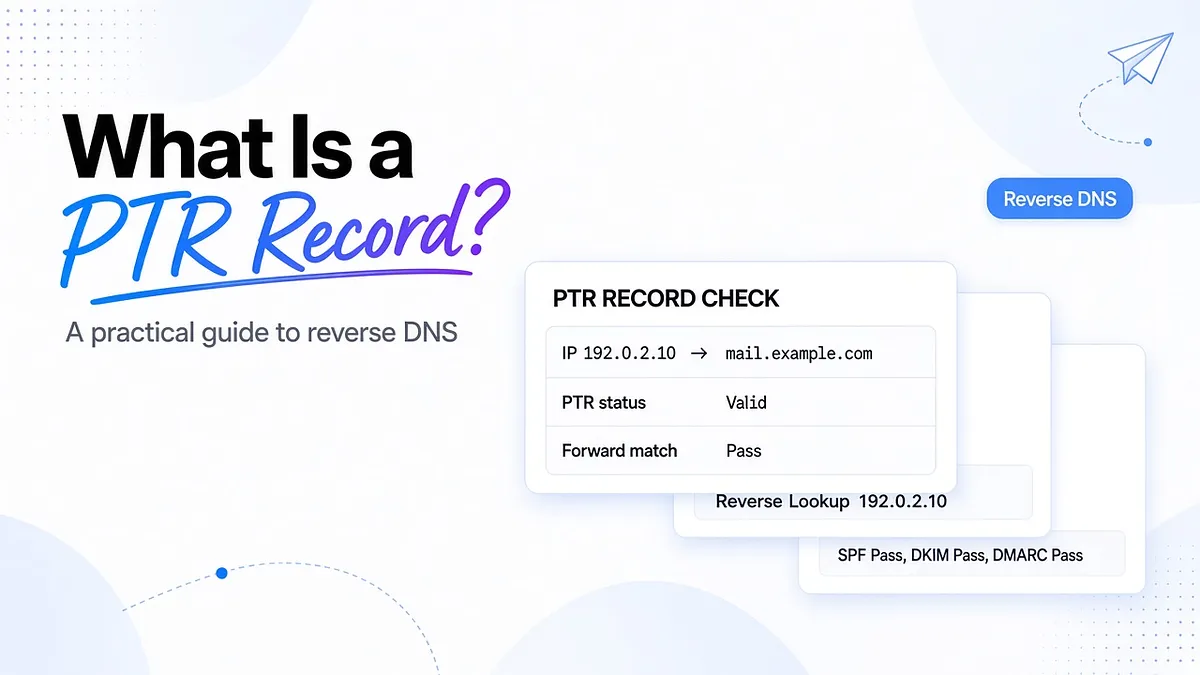
What Is a PTR Record? A Deliverability-First Guide to Reverse DNS
A PTR record maps a sending IP back to a hostname. Learn what reverse DNS is, how to check it, and why missing PTR records hurt email deliverability.
Use this two-phase email deliverability checklist before and after high-volume sends: authentication, reputation, list quality, monitoring, and next steps.
An email header records routing, sender identity, and authentication results. Learn how to read visible vs raw headers when diagnosing inbox vs spam.
One-click unsubscribe is more than a footer link. Learn how RFC 8058 works, who Gmail and Yahoo require it from, and how to verify yours actually works.
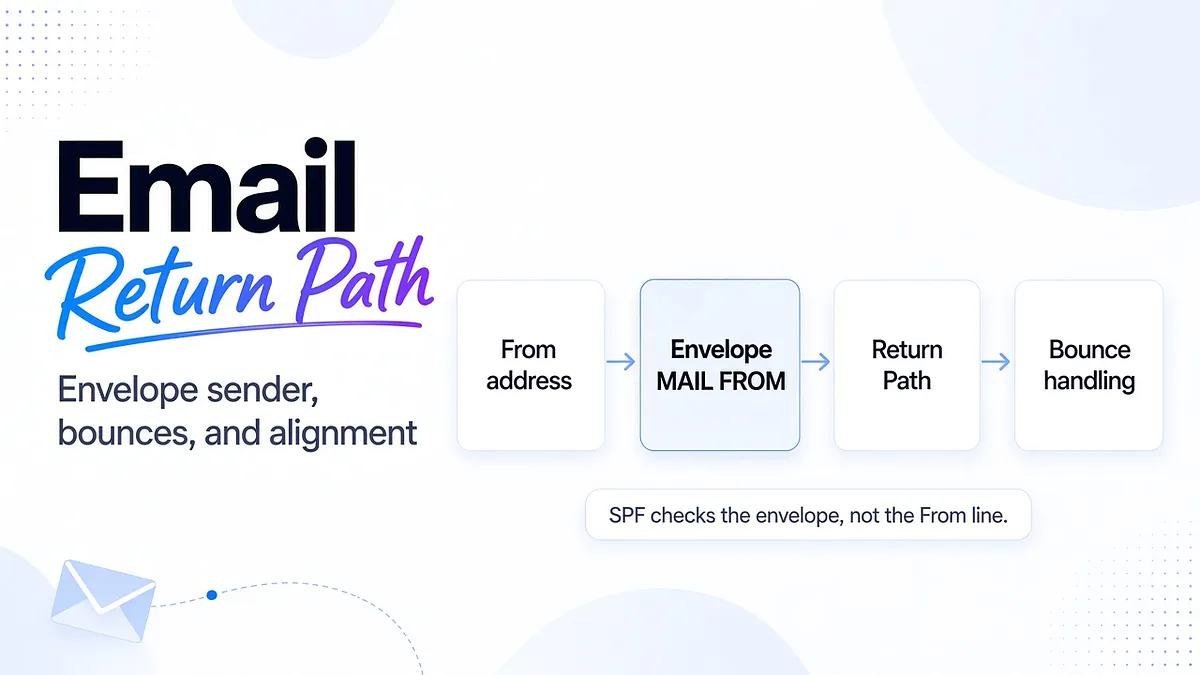
The email return path is the bounce address used for delivery failures, not the visible From. Learn how it affects SPF and DMARC alignment and how to monitor it.
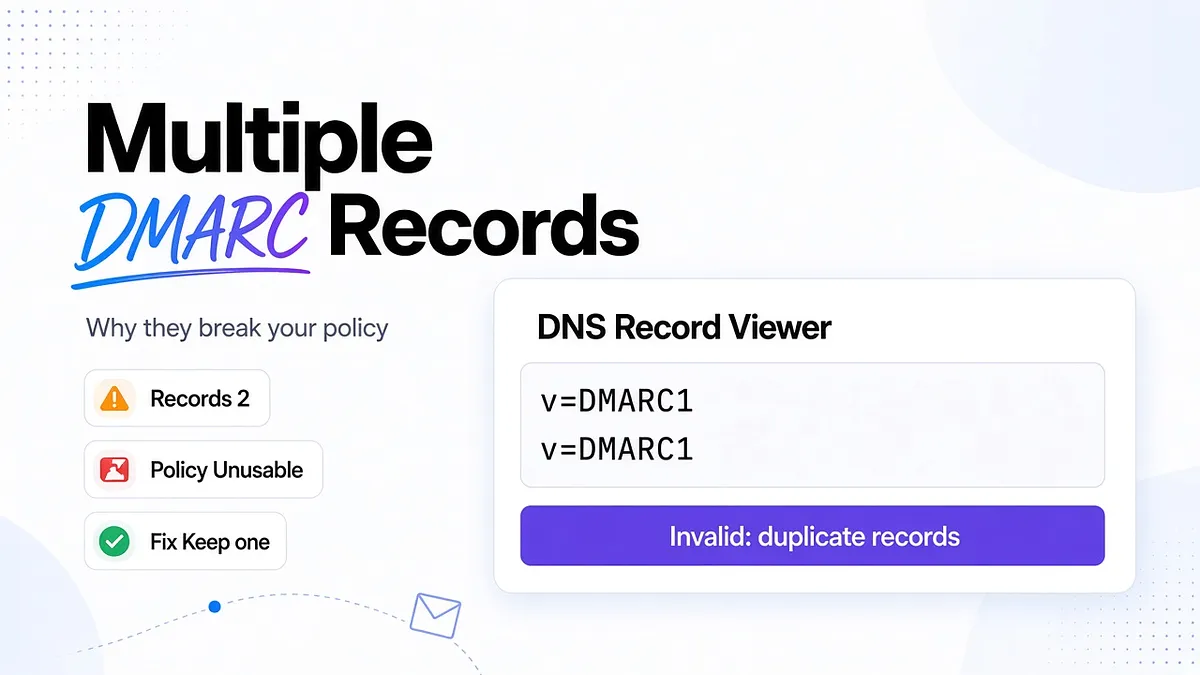
You cannot publish multiple DMARC records at the same DNS name. Here’s why they fail, how to check, and how to fix them without weakening enforcement.
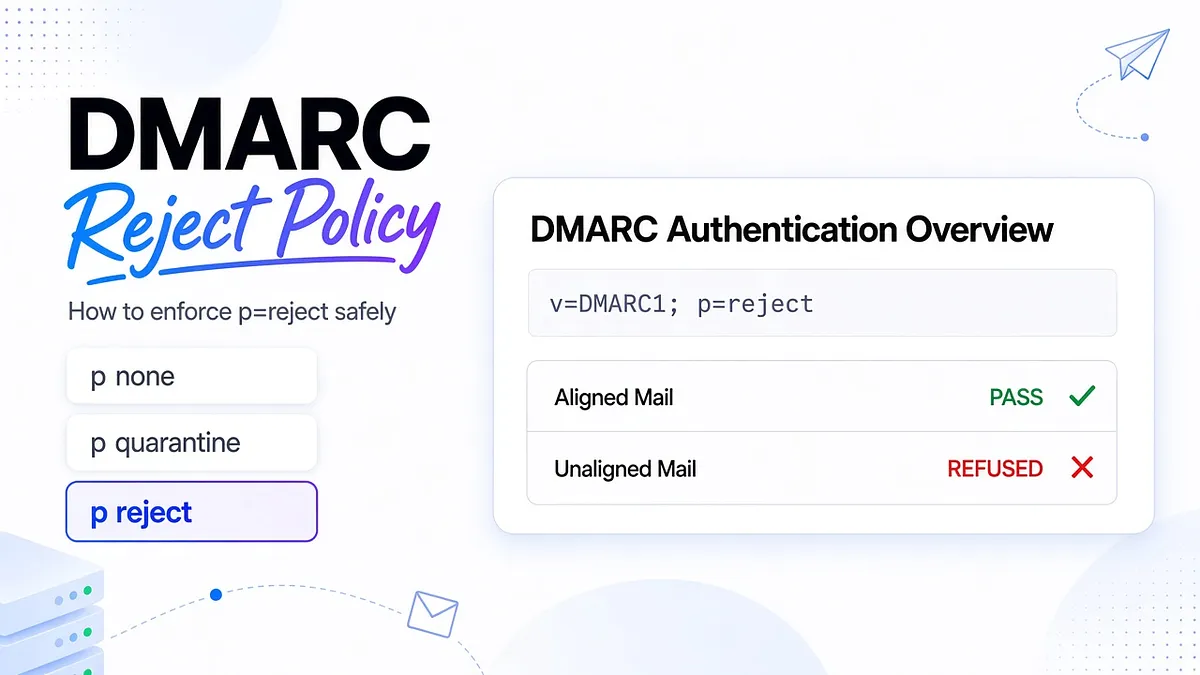
Learn what a DMARC reject policy does, when to enforce p=reject, and how to protect deliverability before and after you flip the switch. Practical guide.
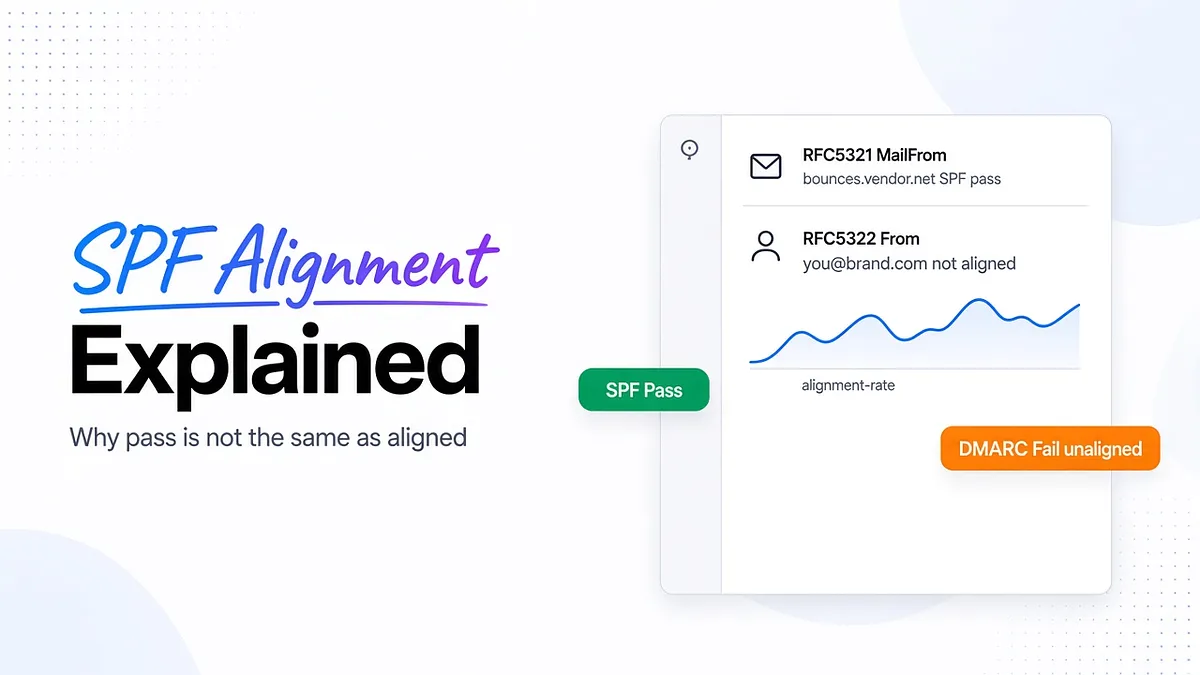
Understand SPF alignment, strict vs. relaxed modes, and why it fails within DMARC. A practitioner's guide to keeping your sends aligned and inboxing.
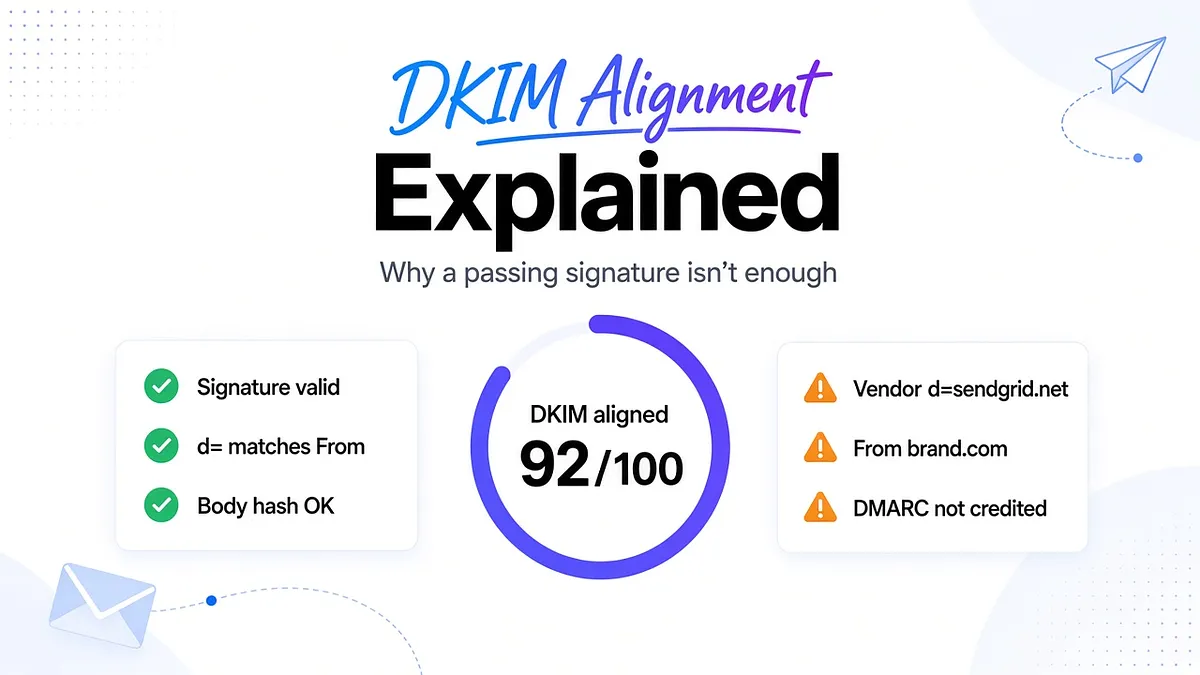
DKIM alignment decides whether a valid DKIM signature passes DMARC. Learn strict vs relaxed alignment, how to fix failures, and monitor it across ESPs.
Showing 1 to 9 of 197 results
Deliverability insights, product updates, and early access to new features. No spam, unsubscribe anytime.
By subscribing, you agree to our Privacy Policy. Unsubscribe anytime.