How Often Should You Audit Email Campaigns?
Most teams should do an email campaign audit before every send, review performance weekly, run a structured monthly review, and complete a quarterly infrastructure audit. High-volume programs should compress weekly monitoring into near-daily oversight. The goal is not to fix deliverability after it breaks. It is to maintain trust before drift becomes expensive.
Most teams perform an email campaign audit only when something feels wrong, instead of treating the email campaign audit as a continuous process.That is usually too late. Deliverability, engagement quality, and infrastructure health drift gradually, long before the problem becomes visible in a dashboard. Many teams still “check things” occasionally, but without a defined cadence those checks rarely prevent issues. The better model is to treat auditing as an operational rhythm. If you are asking how often to audit email campaigns, the answer is not a single date on the calendar. It is a layered system of checks that protects performance before the next send goes out.
Why Most Teams Audit Too Late
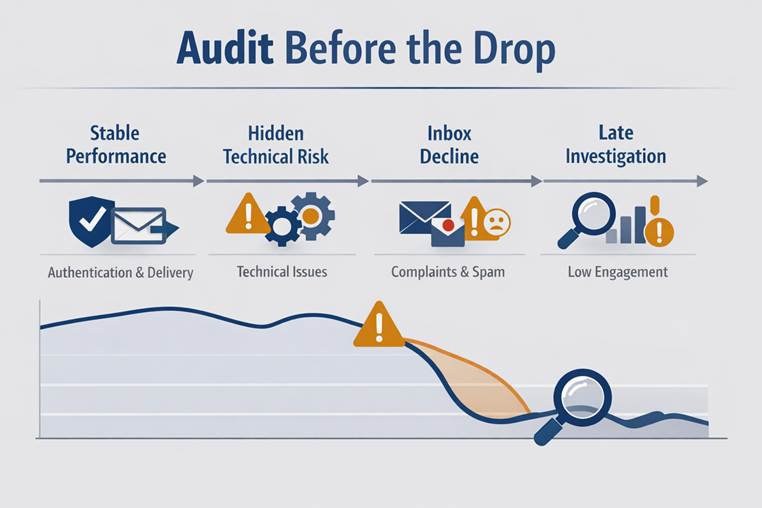
Reactive auditing starts with a symptom, not a cause. By the time a team investigates, reputation may already be under pressure, complaint patterns may be rising, or a technical change may have affected several sends. That is why a sudden drop rarely has a single-campaign explanation.
Strong programs separate campaign review from deliverability governance because both directly impact long-term email marketing ROI. They assume that inbox placement, segment health, and sending behavior can drift even when revenue still looks acceptable. By the time opens or revenue soften, the underlying problem may have been building for weeks, which makes recovery slower and less precise. In practice, you do not fix deliverability once. You maintain it continuously.
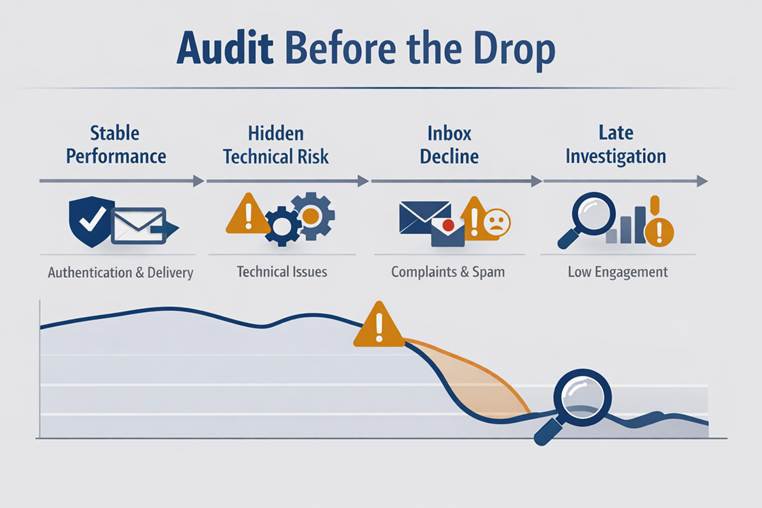
Figure 1. Reactive auditing usually begins after the risk has already started to show.
What Does an Email Campaign Audit Actually Mean?
An email campaign audit is not the same as checking yesterday’s opens and clicks. It is a structured review of whether your program is technically valid, reputation safe, behaviorally consistent, and commercially effective. That means looking at authentication alignment, sender reputation, audience quality, placement signals, sending patterns, and infrastructure consistency.
A good email campaign review process answers a harder question than “did the send go out?” It asks whether the system behind the send is stable, predictable, and still earning inbox trust. That is why auditing is a system review, not a dashboard glance.
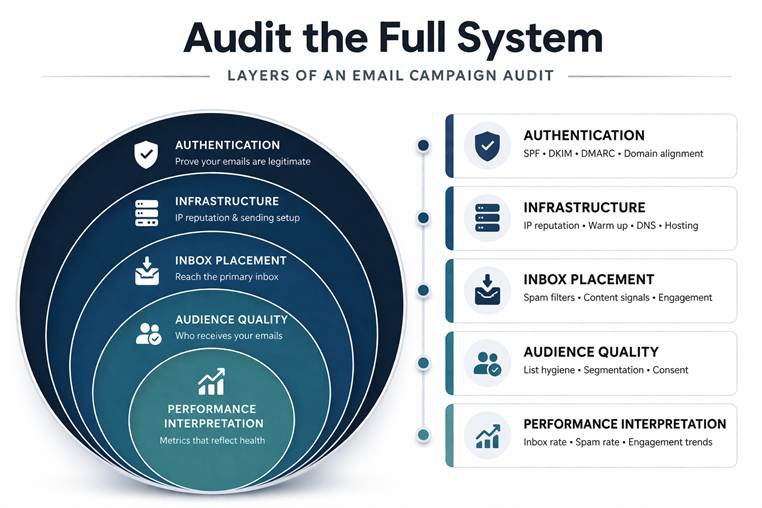
Figure 2. A useful audit looks beyond dashboard metrics and reviews the full sending system.
The 3 Levels of Email Campaign Auditing
1. Pre-Send Checks (Before Every Campaign)
Before each launch, confirm that the sending identity is aligned, the audience is appropriate, volume is consistent with recent history, and links or tracking changes have not introduced risk. Pre-send checks are preventive. They catch errors before they become reputation events.
2. Ongoing Monitoring (Weekly)
Weekly review is where teams detect drift early. Look for changes in engagement quality, complaints, replies, bounce patterns, and placement by provider. This is where email deliverability monitoring frequency matters most: frequent enough to catch movement, calm enough to spot patterns.
3. Deep Audits (Monthly / Quarterly)
Monthly reviews should diagnose segment performance, list quality, unsubscribe friction, and stream-level trends. Quarterly reviews go deeper into infrastructure, tools, domain setup, and process ownership. This is where email deliverability audit frequency becomes strategic rather than reactive.
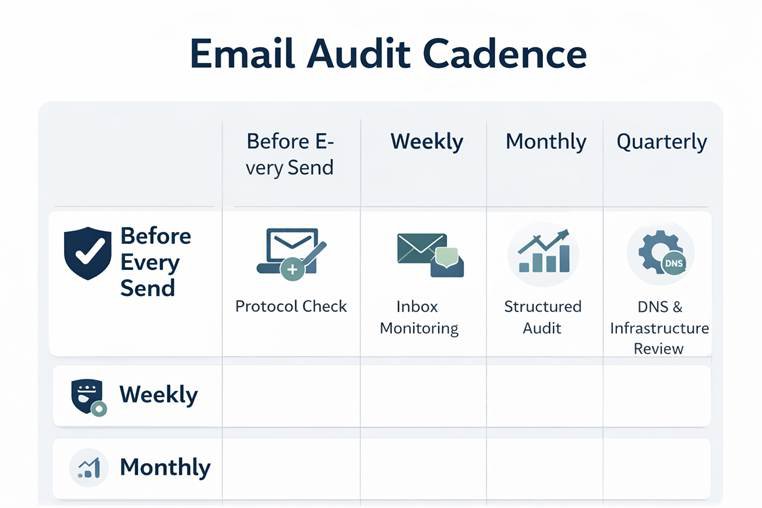
Figure 3. A practical cadence spans before-send, weekly, monthly, and quarterly review.
How Often Should You Audit? The Real Answer
The right cadence is straightforward:
- Before every campaign: run pre-send checks.
- Weekly: monitor engagement, complaints, and placement for drift.
- Monthly: conduct a structured review of segments, sources, and patterns.
- Quarterly: audit infrastructure, authentication, and governance.
High-volume or multi-stream programs should compress weekly monitoring into near-daily operations. Lower-volume teams can move more slowly, but they still need a repeatable cadence. The cadence does not disappear for smaller senders; only the depth changes.
Signs You’re Not Doing it Enough
If performance drops feel random, you are probably not reviewing often enough. Other warning signs include sudden spam placement, unstable engagement, unexplained provider-level changes, broken authentication after tool updates, and no shared view of what changed between one send and the next. If nobody can explain why one provider shifted while others stayed stable, the audit loop is too loose.
Signs You’re Doing It Too Late
You are auditing too late when investigation only starts after revenue falls, when the ESP dashboard is the only source of truth, when no one tests before launch, or when trend data exists but nobody uses it to make decisions.
What to Include in Every Audit
A practical email marketing audit checklist should stay focused on the systems that affect trust. You can also turn this into a free checklist your team uses before every campaign.
- Authentication alignment and sending identity
- Reputation signals and complaint movement
- Inbox placement by provider
- Segment quality and inactivity risk
- Infrastructure consistency across domains, links, and tools
- Unsubscribe experience and suppression hygiene
- Performance by stream, not just blended account averages
This is also how to audit email marketing performance without reducing the exercise to a vanity-metric review. A serious audit connects technical health, audience quality, and business impact in one view. It should help the team decide what to correct, what to watch, and what can safely stay unchanged.
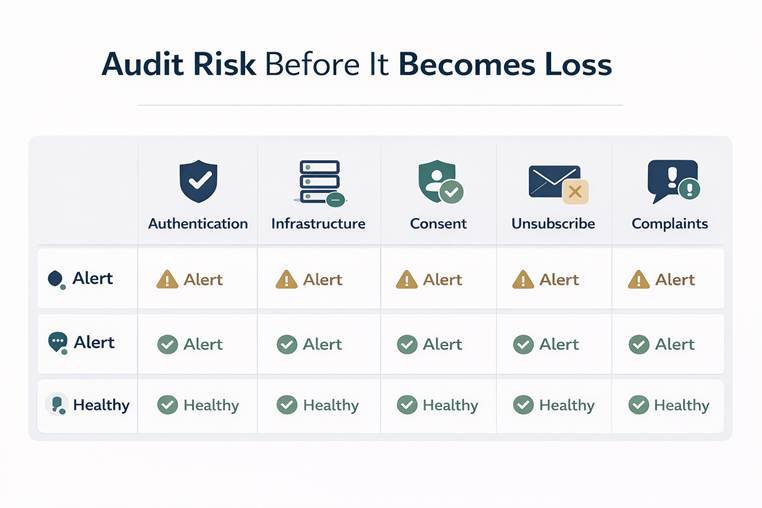
Figure 4. Every audit should review the core risk areas together, not as separate tasks.
Why Deliverability Requires Continuous Monitoring
Deliverability is dynamic. Filtering changes, user behavior changes, and your own program changes with new segments, tools, templates, and volume. That is why “set and forget” does not work. If your team is wondering how often to check email deliverability, start by matching review speed to send frequency and program complexity. Mailbox providers react to patterns, not intentions, so small shifts in behavior can create bigger placement changes over time. The higher the volume and the more moving parts, the tighter the monitoring loop should be.
The Difference Between Monitoring and Understanding
Monitoring tells you that metrics moved. Understanding tells you why. A weekly email performance audit may show softer clicks or lower inbox placement, but diagnosis requires context: which stream changed, which audience weakened, what technical variable shifted, and whether the issue is localized or systemic. Without that context, teams often optimize copy when the real problem is list quality, segment fatigue, or authentication drift. Insight is what turns data into action.
Build an Audit Rhythm, Not a One-Time Fix
The most reliable teams make auditing routine. They assign owners, define review layers, log meaningful changes, and decide in advance what triggers escalation. That discipline turns auditing from a rescue task into an operating system. Instead of reacting to volatility, the team learns to see drift early and correct it before it becomes visible to the business. A simple owner-and-review model usually beats heroic debugging after a bad month.
Figure 5. Tools help, but consistent cadence and ownership are what make audits useful.
Audit Consistently and Send with Confidence
A strong audit rhythm gives marketing, CRM, and deliverability teams something more valuable than a dashboard: confidence in why performance is stable. Mailora fits best as a visibility layer across authentication, placement, and performance so teams can monitor change, diagnose causes, and act before the next campaign launches. Review your email campaign audit cadence now, run a deliverability test before the next major send, and make auditing part of the workflow instead of the recovery plan.
Stay in the loop
Deliverability insights, product updates, and early access to new features. No spam, unsubscribe anytime.
By subscribing, you agree to our Privacy Policy. Unsubscribe anytime.