Email Deliverability Monitoring: Why It Matters More Than Testing
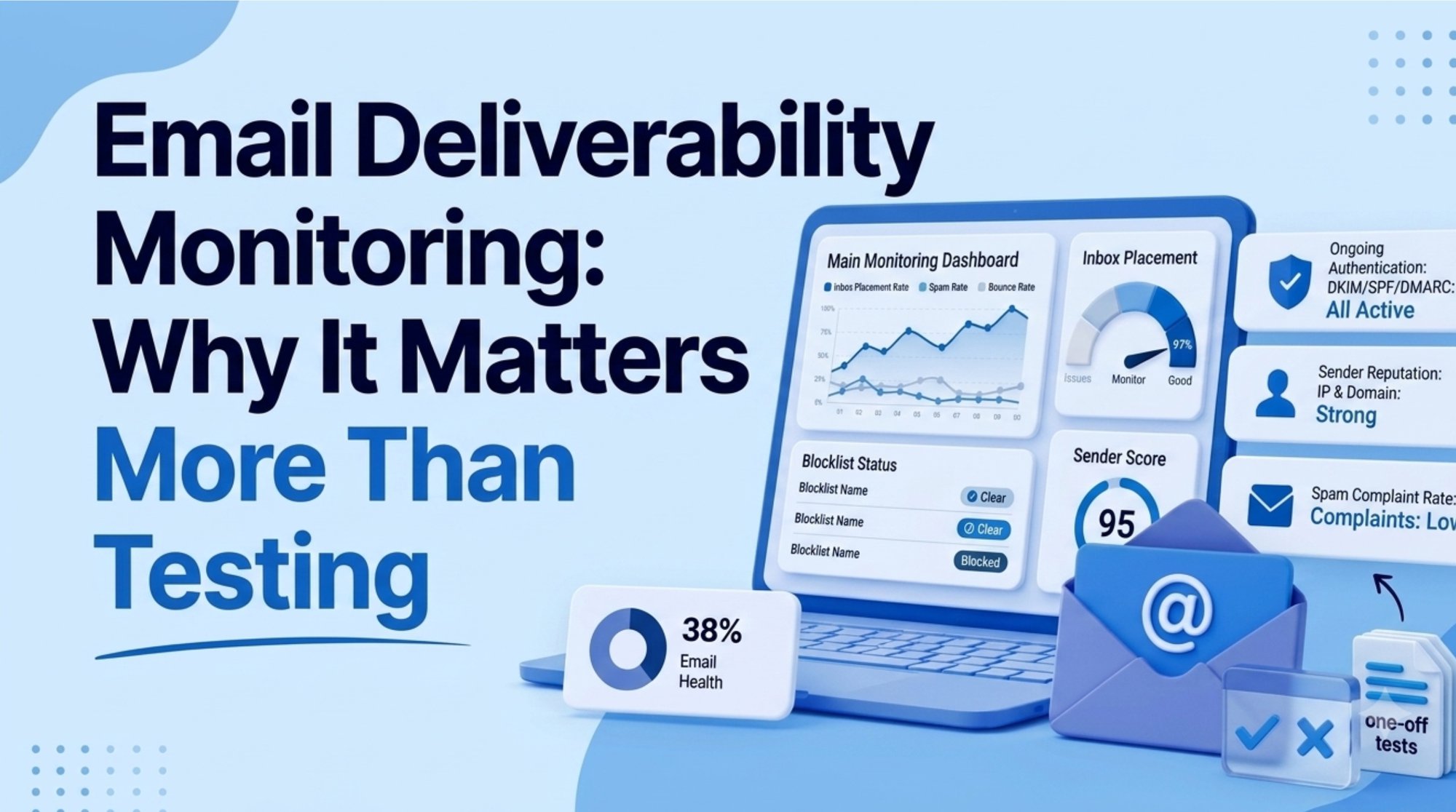
Send a test email to a seed list, check whether it landed in the inbox or spam, and move on. This has been the default deliverability workflow for a long time, and it isn't without value. But treating a pre-send test as sufficient evidence that a sending program is healthy misunderstands what testing can and can't tell you. Email deliverability monitoring, not periodic testing, is what actually shows whether a sending program is healthy, because it captures a trend instead of a single moment. That ongoing visibility also helps teams deliver exceptional brand experiences across the entire customer journey.
What Testing Can Tell You
Pre-send testing has a genuine, specific role. Sending a message to a panel of seed accounts across major providers, Gmail, Outlook, Yahoo, and checking where it lands gives a snapshot of how that particular message, sent at that particular moment, from that particular infrastructure, is likely to be treated by an email service provider (ESP).
This is useful for catching certain kinds of problems before they affect a full send. A broken authentication record will often show up clearly in a test. A dramatic content issue, like a message that trips an obvious spam filter due to formatting, can also surface through testing. Testing also provides a controlled way to compare specific variables, such as two subject line versions sent to the same seed panel.
What Testing Cannot Predict
The limitations of testing become clear once you consider what actually drives inbox placement over time. Seed list results reflect the reputation and conditions present at the moment of the test. They cannot predict how a mailbox provider's filtering algorithm might shift next week, since these systems are updated frequently and not publicly documented in detail.
They also can't capture real audience engagement, one of the most influential signals in ongoing placement decisions. A seed account doesn't behave like a genuine subscriber who opens some emails, ignores others, and occasionally marks something as spam. Looking at a single test in isolation also makes it difficult to spot recurring behavioural shifts across campaigns. Email campaign pattern analysis helps identify these longer-term trends, making it easier to distinguish one-off anomalies from systematic deliverability issues. Perhaps most importantly, testing can't catch a gradual decline. If engagement starts slipping campaign over campaign, a series of individual pre-send tests, each looking fine in isolation, will completely miss that trend, since no single test is designed to compare itself against the ones before it. This is precisely the gap email deliverability monitoring is built to close.
Testing vs Monitoring at a Glance
| Dimension | Pre-Send Testing | Email Deliverability Monitoring |
|---|---|---|
| What it captures | A single moment in time | Trends across every campaign, continuously |
| Data source | Seed panel accounts | Real recipient engagement and reputation data |
| Catches gradual decline? | No | Yes |
| Best used for | Validating a specific change | Ongoing health tracking and early warning |
| Requires manual action? | Yes, run before each send | No, runs continuously in the background |
Why Email Deliverability Monitoring Shows the Real Picture
Monitoring addresses exactly the gap testing leaves open, but achieving continuous visibility typically requires dedicated email deliverability tools. Rather than checking a single moment, email deliverability monitoring involves continuously tracking reputation, authentication status, and engagement metrics across every campaign, building a trend line rather than a snapshot.
This continuous view makes it possible to see a decline while it's still small. Complaint rate ticking up slightly over three consecutive campaigns is a signal worth investigating. A single test showing good placement in the inbox on a given day tells you nothing about that trend, because it isn't designed to look backward or forward in time.
There's also a practical operational benefit. Monitoring that includes alerting means a team can be notified when a meaningful shift occurs, without needing to manually run and interpret a test. This shifts deliverability management from a reactive, testing-triggered activity to a proactive, continuously observed one.
Building a Continuous Email Deliverability Monitoring Process
A practical monitoring setup usually includes a few core components, working together rather than in isolation:
- Authentication monitoring, confirming SPF, DKIM, and DMARC remain correctly configured and passing over time.
- Reputation tracking, following sender and domain reputation trends, including complaint rates, bounce rates, and blacklist status.
- Engagement trend analysis, comparing open rates, click rates, and unique engagement against historical baselines by mailbox provider.
- Inbox placement tracking, where available, providing direct visibility into whether campaigns are landing in primary inboxes versus spam folders.
Dashboards and alerts are only useful if someone is actually reviewing them on a consistent schedule, whether that's a weekly check-in or an automated alert threshold that flags meaningful deviations for immediate attention.
If you're unsure what review cadence makes sense for your program, this guide on how often you should audit email campaigns explains how to balance routine health checks with continuous monitoring without creating unnecessary overhead.
Why Mature Email Teams Prioritize Monitoring Over Testing
Teams with the strongest, most consistent deliverability outcomes tend to share a common trait: they treat email deliverability monitoring as an ongoing operational discipline rather than a one-time setup task or an occasional testing exercise. This mirrors how other operational functions, like security or infrastructure reliability, are managed, where continuous monitoring with alerting consistently outperforms periodic manual checks.
Prevention, through early detection, is consistently easier and less costly than recovery after reputation has already been damaged. Recovering from a sustained reputation decline can take weeks of careful, deliberate effort. For organizations facing persistent inbox placement problems or complex infrastructure issues, working with experienced email deliverability consultants can help identify root causes and accelerate recovery. Catching that same decline in its early stages, through consistent monitoring, might require nothing more than a minor adjustment to sending practices.
None of this means testing is pointless. Testing still has a role, particularly around specific changes like infrastructure migrations or major campaign redesigns. But as the primary mechanism for understanding deliverability health, it falls short of what continuous monitoring provides. Whether a team uses Omnisend or another ESP, monitoring provides a more dependable channel for understanding performance over time.
Frequently Asked Questions
What is email deliverability monitoring, exactly?
It's the ongoing tracking of authentication status, sender reputation, and engagement metrics across every campaign a domain sends, rather than a one-time check performed before a single send. It's designed to reveal trends, not just a snapshot.
Should I stop pre-send testing altogether in favor of monitoring?
No. Testing still serves a useful purpose, particularly when validating specific changes like a new domain or a redesigned template. Email deliverability monitoring and testing work best as complementary practices, not substitutes for each other.
How often should email deliverability monitoring run?
Ideally continuously, with automated tracking of authentication, reputation, and engagement metrics, supplemented by a regular review cadence, whether weekly or biweekly, to interpret trends.
What's the earliest sign that monitoring typically catches before it becomes a bigger problem?
Gradual increases in complaint rate or slow declines in engagement are among the most common early signals, usually invisible in a single test but clear once tracked consistently over several campaigns.
Learn how Mailora's email deliverability monitoring helps you catch what changed before it affects your next campaign, not after. Explore our related articles for more expert insights on building better email programs.
Stay in the loop
Deliverability insights, product updates, and early access to new features. No spam, unsubscribe anytime.
By subscribing, you agree to our Privacy Policy. Unsubscribe anytime.