DNS Authentication: DMARC Fail Causes and Fixes
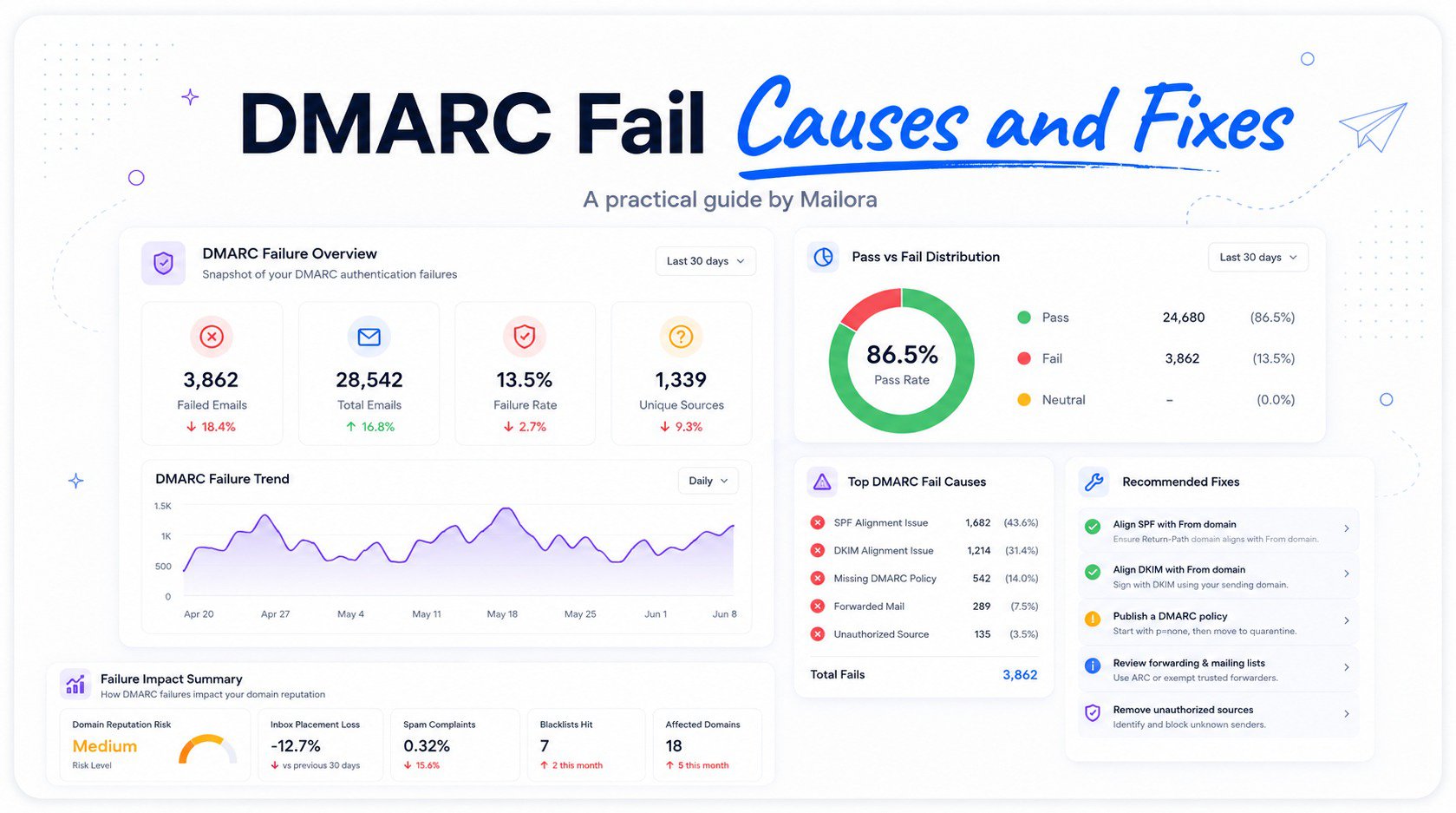
A message can pass SPF. It can pass DKIM. And it can still fail DMARC. This surprises a lot of people setting up DNS authentication and email authentication for the first time, because it seems to contradict how the three protocols are usually described together. When it comes to DNS authentication, DMARC fail results are almost always about a piece of the process that gets far less attention than SPF and DKIM individually: alignment.
What "DMARC Fail" Actually Means
DMARC doesn't perform its own independent authentication check. It sits on top of SPF and DKIM, adding a requirement neither protocol enforces on its own: alignment between the domain used for authentication and the domain shown in the message's visible From header. A message passes DMARC only if at least one of SPF or DKIM both passes and aligns with the From domain. The required authentication level is determined by the organization's DMARC policies and the selected DMARC level.
This distinction matters because SPF and DKIM can each pass on their own terms while still failing DMARC. In most cases of DNS authentication, DMARC fail results signal an alignment problem rather than a fundamental authentication failure. The underlying SPF or DKIM mechanism may be working exactly as configured. It's just authenticating a different domain than the one appearing in the message the recipient sees. This can produce a dmarc=fail result even when the individual authentication checks appear successful.
SPF Alignment Failures vs DKIM Alignment Failures
| Failure Type | What Passes | What Fails | Common Cause |
|---|---|---|---|
| SPF alignment failure | SPF for envelope domain | Alignment with From domain | Third-party platform using its own envelope sender |
| DKIM alignment failure | DKIM signature verification | Alignment with From domain | Platform signs with its own domain, not the client's |
| Forwarding-related | Original SPF/DKIM at send time | SPF specifically, after forwarding | Forwarding server not in original SPF record |
SPF alignment failure happens when SPF passes for the envelope sender domain, but that domain doesn't match, or isn't a subdomain of, the domain in the visible From header. This is common with third-party sending platforms that use their own domain for the technical envelope sender while displaying the client's domain in the From address. The 5322.From address is the domain recipients see, while the envelope sender is used for the technical delivery process.
DKIM alignment failure occurs when a valid DKIM signature exists and verifies correctly, but the domain specified in the signature's d= tag doesn't match the visible From domain. Because DMARC only requires one of SPF or DKIM to pass and align, a message can still pass DMARC overall if SPF aligns correctly even when DKIM alignment fails, or vice versa. Reviewing the dmarc checks for each sender helps identify whether SPF, DKIM, or both are responsible.
Fixing this issue also protects domain reputation. Unaligned messages may be treated as suspicious or rejected alongside malicious emails, even when they were sent by a legitimate platform on the organization's behalf.
Reading DMARC Failure Reports (RUF)
Where forensic reporting is supported and configured through the ruf tag, DMARC failure reports provide message-level detail about exactly what failed and why. A forensic report typically includes the specific SPF and DKIM results, the domains involved in each check, and the alignment outcome. DMARC documentation may also show the current dmarc record, dmarc policies, and the dmarc level applied to the message.
For example, reports associated with rua=mailto:******@news.mailsuprema.it or the sending domain news.mailsuprema.it can reveal unrecognized sources, failed sources, and whether multiple messages came from the same IP. These details provide a good overview of legitimate traffic, possible malicious activity, and inconsistent dmarc validation results.
It's worth noting that forensic report support has narrowed considerably across major mailbox providers due to privacy considerations. In practice, aggregate (rua) reports, reviewed carefully, often provide sufficient detail to diagnose alignment issues at the sending-source level. They can also reveal an intermittent dmarc fail issue that would be difficult to identify from individual bounce errors alone.
Fixing and Preventing DNS Authentication: DMARC Fail Issues
Resolving a DNS authentication: DMARC fail issue starts with identifying which specific check, SPF, DKIM, or both, is failing alignment, and for which sending sources, using aggregate report data as the primary diagnostic tool. From there:
- For third-party ESPs or CRMs, confirm the platform supports custom SPF envelope sender domains or DKIM signing under the client's own domain, often called custom or branded authentication. This ensures the sender is authorized to send on the organization's behalf.
- For DKIM specifically, verify that the d= domain in the signature matches or aligns with the sending domain, correcting the signing configuration if it doesn't.
- Use relaxed alignment mode, the default for both adkim and aspf tags, to allow subdomain matches rather than requiring an exact domain match.
- Review aggregate reports regularly, particularly after adding any new sending platform, since alignment issues are far easier to catch at a monitoring-only DMARC policy than after moving to enforcement. Real-time insights and ai-powered solutions can help identify new authentication standards, failed sources, and unrecognized sources before they affect deliverability.
If legitimate messages generate many bounce messages, review the current dmarc record and the platform's SPF and DKIM settings before changing the policy. Some recipients may return errors such as 550 5.7.515 access when authentication requirements are not met; Outlook.com - Microsoft Support guidance may also point administrators toward stronger email authentication.
Frequently Asked Questions
Can a message fail DMARC even if SPF and DKIM both technically pass?
Yes, if neither passing check aligns with the domain shown in the visible From header. This is the most common source of confusion in DNS authentication: DMARC fail cases where authentication appears valid but still fails overall.
Is a DMARC failure always a sign of a spoofing attempt?
No. Most DMARC failures from legitimate senders stem from configuration issues, particularly with third-party sending platforms not properly aligning SPF or DKIM with the client's domain, rather than actual malicious activity. However, persistent dmarc failures from unknown sources can indicate spoofing or other malicious emails and should be investigated.
What's the difference between SPF alignment and SPF authentication?
SPF authentication checks whether a sending IP is authorized for a given domain. SPF alignment separately checks whether that authorized domain matches the visible From domain, which is the piece most often missed in DNS authentication: DMARC fail scenarios. SPF can therefore be 1.0 compliant while DMARC still fails if the sender domain does not align with the 5322.From address.
Should I switch to strict alignment to catch more DMARC failures?
Generally not as a first step. Strict alignment requires an exact domain match rather than allowing subdomains, which can cause additional legitimate mail to fail alignment. Relaxed alignment, the default, is usually the more practical starting point. A gradual move through the available dmarc level options gives an organization time to validate its sources and authentication requirements.
Learn how Mailora helps you monitor DMARC alignment across every sending source, so you can fix the real cause of a DNS authentication: DMARC fail instead of guessing between SPF and DKIM.
Stay in the loop
Deliverability insights, product updates, and early access to new features. No spam, unsubscribe anytime.
By subscribing, you agree to our Privacy Policy. Unsubscribe anytime.